
MEPs Respond to DFA Leak During IMCO Workshop
By James Tamim - 09/11/2026
MEPs outline their concerns over addictive design, consumer protection and regulatory overlap ahead of the Commission’s expected proposal on 11 November.
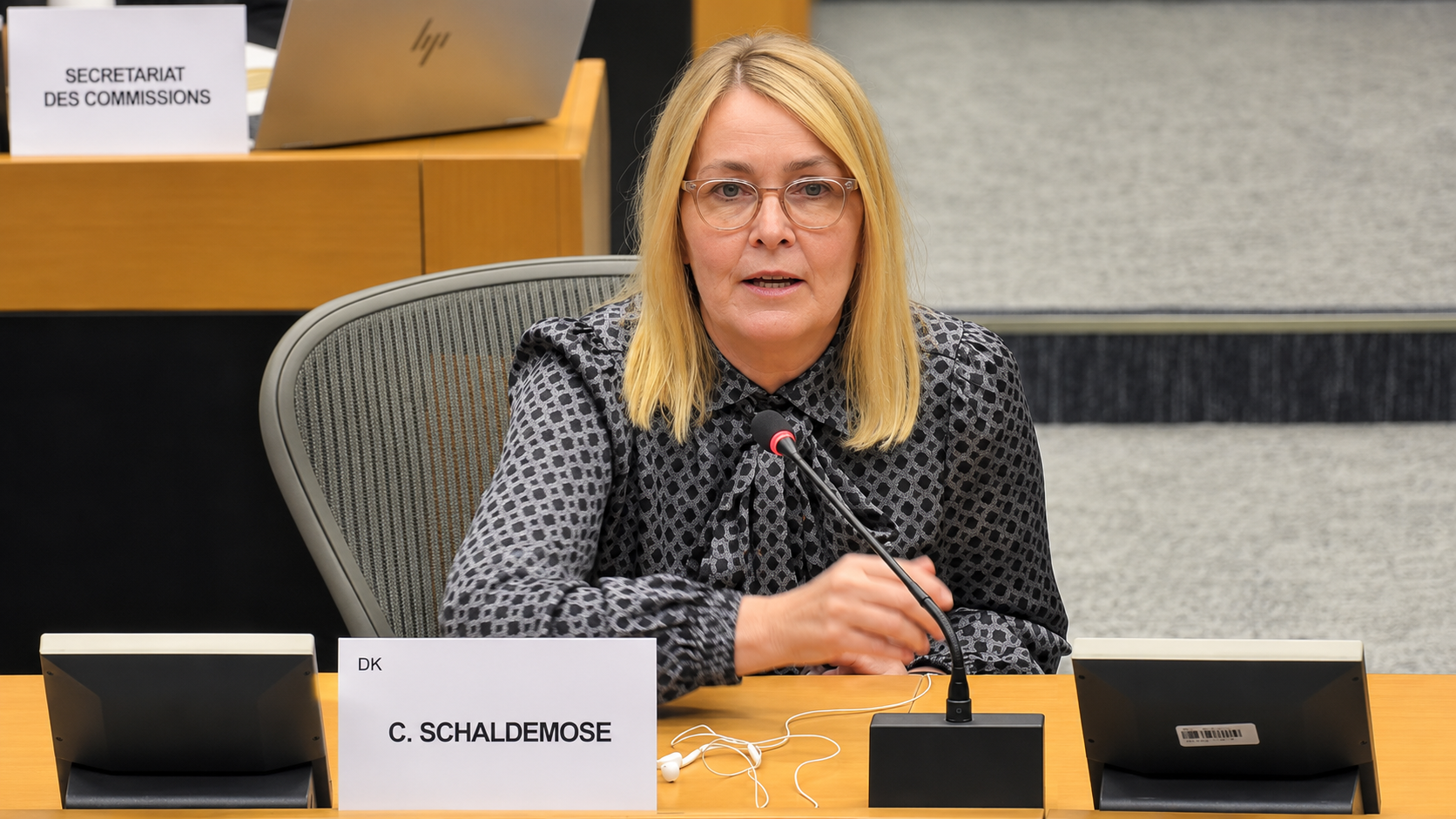
On 9 November 2026, the European Parliament’s IMCO Committee held a workshop on the upcoming Digital Fairness Act. The meeting took place on the same day that the draft of the DFA was leaked, prompting several MEPs to comment on its provisions. Their remarks should be understood as preliminary reactions.
The workshop featured presentations by three legal academics: Emilia Mišćenić, Peter Rott and Przemysław Pałka, followed by exchanges with MEPs and a representative of the European Commission’s DG JUST.
With the Commission planning to adopt the DFA proposal on 11 November 2026, the exchanges offered an early indication of the issues MEPs may seek to address during the legislative negotiations.
Kim van Sparrentak (Greens/EFA, Netherlands)
Van Sparrentak expressed strong disappointment with aspects of the leaked DFA draft, particularly its approach to addictive design. She warned that the proposed measures risk falling short of the protections needed to address the impact of manipulative digital practices on consumers’ health and democracy.
Her main concerns included:
Opt-out rather than opt-in: Van Sparrentak criticised the apparent decision to allow consumers to disable addictive features rather than requiring their prior agreement. She argued that this could create another system resembling cookie banners, requiring users to navigate frustrating choices when accessing websites or applications instead of protecting them by default.
Social media algorithms: She questioned whether some of the most addictive social media algorithms would fall outside the draft’s scope. She expressed concern that the legislation could fail to address some of the most problematic forms of engagement-driven design.
Protection beyond minors: She stressed that addictive design affects all consumers, not only children or those classified as vulnerable. In her view, manipulative features exploit weaknesses that individuals cannot reasonably be expected to resist.
Dynamic pricing: Van Sparrentak questioned the Commission’s apparent reliance on transparency obligations rather than substantive restrictions on certain pricing practices. She asked whether research supported the effectiveness of transparency in protecting consumers.
Van Sparrentak warned that failing to address these issues adequately would be a serious missed opportunity for European consumer protection.
Laura Ballarín Cereza (S&D, Spain)
Ballarín Cereza reiterated the S&D Group’s support for ambitious legislation addressing gaps in existing consumer protection rules. While cautioning that it was too early to make a final assessment of the leaked draft, she welcomed the opportunity to tackle addictive design, dark patterns, manipulative advertising and personalisation.
She outlined three priorities:
Corporate responsibility instead of consumer responsibility: Ballarín Cereza argued that allowing consumers to switch off addictive features would not be sufficient. Companies should bear responsibility for the potentially harmful mechanisms they design, rather than placing the burden on users to protect themselves. She called for safety and fairness to be the default.
Protecting children: She insisted that children must remain central to the DFA and that the legislation must work alongside the EU Kids Act without leaving gaps or loopholes. She indicated that Parliament should ensure coherence between the two initiatives.
Dynamic pricing and enforcement: She called for stronger action against economic manipulation, particularly dynamic pricing. She argued that transparency alone would not adequately protect consumers and stressed the importance of effective enforcement at European level.
Her intervention pointed towards an approach favouring stronger obligations on businesses, rather than relying primarily on consumer choice and information requirements.
Dóra Dávid (EPP, Hungary)
Dávid focused on the need for targeted, future-proof legislation that delivers tangible benefits without duplicating existing obligations.
She questioned whether introducing more detailed rules would necessarily improve consumer protection, particularly given the extensive legal framework already governing digital services.
Her concerns included:
Preserving principles-based consumer law: Dávid argued that the existing Unfair Commercial Practices Directive (UCPD) already covers dark patterns through its general prohibitions. She questioned whether expanding the list of prohibited practices would remain effective as technology and manipulative techniques evolve. She suggested that flexible guidelines could offer advantages over increasingly detailed legislative provisions.
Avoiding regulatory overlap: She stressed that the DFA should address clearly identified gaps rather than duplicate obligations under the Digital Services Act, AI Act or existing consumer protection legislation. Overlapping requirements, she argued, could create uncertainty and make compliance more difficult.
Harmonisation across Member States: Dávid welcomed the prospect of a regulation but insisted that it should deliver uniform rules throughout the EU, avoiding divergent national requirements for businesses and consumers.
Simplification: She called for the Commission’s commitment to simplifying consumer protection rules to be reflected in the legislation, rather than introducing additional reporting requirements.
Relationship with the EU Kids Act: She questioned whether DFA provisions specifically addressing minors would be better placed in the EU Kids Act, which is dedicated to children’s protection.
Dávid also asked the Commission whether it would be able to demonstrate, for each new DFA obligation, which regulatory gap it was intended to close and why existing legislation was insufficient.
Her interventions suggested support for a narrowly targeted initiative, with an emphasis on legal certainty, harmonisation and maintaining the flexibility of existing consumer law.
Christel Schaldemose (S&D, Denmark)
Schaldemose questioned whether the traditional distinction between average and vulnerable consumers remains appropriate in digital markets.
She argued that even well-informed and highly educated consumers can be manipulated online, suggesting that digital vulnerability should be recognised as a problem affecting consumers more generally, rather than only specific categories.
She raised several issues:
Redefining consumer vulnerability: Schaldemose questioned whether EU consumer law should continue distinguishing between average and vulnerable consumers, or instead provide stronger protections to consumers generally.
Access to human assistance: She highlighted the difficulties consumers face when dealing with online retailers, particularly when attempting to return goods, exercise their rights or contact customer service. She criticised situations in which consumers cannot reach a person and receive only unhelpful chatbot responses.
Misleading online shops: She described the difficulties consumers can face in identifying where an online trader is actually established, including websites that appear to operate domestically but may not.
Future-proofing prohibitions: Although supportive of stronger consumer protection, she questioned whether highly specific prohibitions could be easily circumvented as businesses develop new techniques. Referring to the DSA negotiations, she suggested that broader legal principles, supplemented by judicial interpretation, could provide greater flexibility.
Burden of proof: In her second intervention, Schaldemose suggested that reversing the burden of proof, or adopting other measures to assist consumers, could help address the difficulties they face in enforcing their rights.
She welcomed the forthcoming DFA as an opportunity to close remaining protection gaps, particularly those that have become more apparent since the adoption of the DSA.
At the same time, she emphasised the need to avoid duplicating existing legislation and imposing unnecessary obligations on businesses acting fairly.
Jeannette Baljeu (Renew Europe, Netherlands)
Baljeu also questioned the distinction between average and vulnerable consumers, suggesting that all consumers may face risks in digital environments.
She raised two issues during the workshop:
Consumer vulnerability and accountability: Baljeu questioned why legislation should distinguish between categories of consumers when online risks potentially affect everyone. Responding to concerns about difficulties contacting online traders, she referred to the concept of a responsible person in existing rules concerning customs and asked what implementation difficulties could arise from such an approach.
Social media and negative engagement: She raised concerns about the psychological effects of social media on young people, particularly the tendency for negative content to attract greater engagement. She questioned whether this phenomenon should be addressed in the context of advertising and commercial practices or through a different regulatory approach.
Her interventions did not set out specific proposed amendments, but highlighted questions about the scope of consumer protection and how the effects of social media design should be addressed.
European Commission — Maria-Myrto Kanellopoulou (DG JUST)
Maria-Myrto Kanellopoulou, Head of the Consumer Law Unit at DG JUST, represented the European Commission.
She confirmed that the Commission was expected to table the Digital Fairness Act on Wednesday, 11 November 2026, but declined to comment in detail on the forthcoming proposals.
Her intervention outlined the Commission’s approach to the legislation and addressed several concerns raised by MEPs and experts.
Targeted and proportionate legislation
Kanellopoulou stressed that the Commission had sought to develop targeted and proportionate measures that would update existing horizontal consumer protection rules without unnecessarily increasing regulatory complexity.
She said the Commission had examined dark patterns, influencer marketing, addictive design and unfair personalisation, alongside broader questions concerning the concepts of average and vulnerable consumers.
The objective, she explained, was to reconcile the flexibility of existing principles-based consumer law with more specific requirements capable of improving clarity, implementation and enforcement.
Avoiding duplication with existing legislation
Kanellopoulou emphasised that the Commission did not intend to duplicate the Digital Services Act, Audiovisual Media Services Directive or AI Act.
Instead, the DFA was intended to update baseline protections applying horizontally to business-to-consumer commercial practices, complementing the more specific obligations found in sectoral legislation.
She also stressed the importance of ensuring coherence with the proposed EU Kids Act, particularly concerning the protection of minors and addictive design. DG JUST and DG CONNECT would continue coordinating their work throughout the negotiations.
Consultation and regulatory gaps
Responding to questions about the justification for new rules, Kanellopoulou said the Commission had relied on the Digital Fairness Fitness Check, extensive stakeholder consultations, behavioural research and recent Court of Justice case law.
She stated that the call for evidence and public consultation had received more than 7,000 responses.
The forthcoming impact assessment, she explained, would show how the Commission had identified gaps and areas of legal uncertainty and selected its preferred policy responses.
Member State feedback
Kanellopoulou confirmed that the Commission had engaged with Member States through relevant Council working parties and consultation activities, including receiving further input in the days preceding the workshop.
She said the Commission had sought to take different perspectives into account when preparing a balanced proposal, but did not provide a detailed breakdown of individual Member States’ positions.
The Commission’s central message was that the DFA should strengthen consumer protection through clearer and more enforceable rules, while preserving legal coherence and avoiding unnecessary regulatory burdens.